Decisions based on relevant data
Organise information around the questions that affect routine operations.

Digital health advisory
We start with the decisions a programme team needs to make. We identify gaps in the available data and help teams organise it, automate routine reports and anticipate where resources may be needed.

The challenge
Programme teams can have plenty of data and still be missing what they need to answer a specific question. We start with the decision at hand, then work out what information is available, what’s missing and how it can be used.
Our approach
Identify what to collect, help teams organise and interpret it, and work through questions of access, governance and compliance.
Automate reports, make routine indicators easier to interpret and use past activity to explore future needs.
Compare programme data with other evidence and expert input to understand what could explain the patterns.
Benefits
Organise information around the questions that affect routine operations.
Use complementary evidence to put local findings in context.
See how indicators and operational issues change over time.
Identify where staff, training or supplies may be needed most.
Use historical data to compare plausible scenarios and their expected outcomes.
In practice
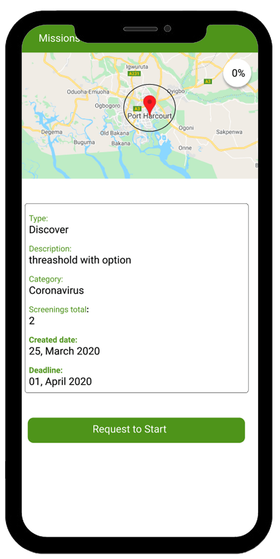
A patient record timeline can help clinicians review key events before opening individual results. In community screening, MediScout uses questionnaire responses to support referral decisions. Both examples start with what the person using the tool needs to decide next.
Selected work
Democratic Republic of the Congo
Outreach teams used MediScout maps to plan tuberculosis screening, record visits on mobile devices and refer people for testing.
Read the case studyStart a conversation
Tell us what your team is working on and where digital health tools could help.
Get in touch